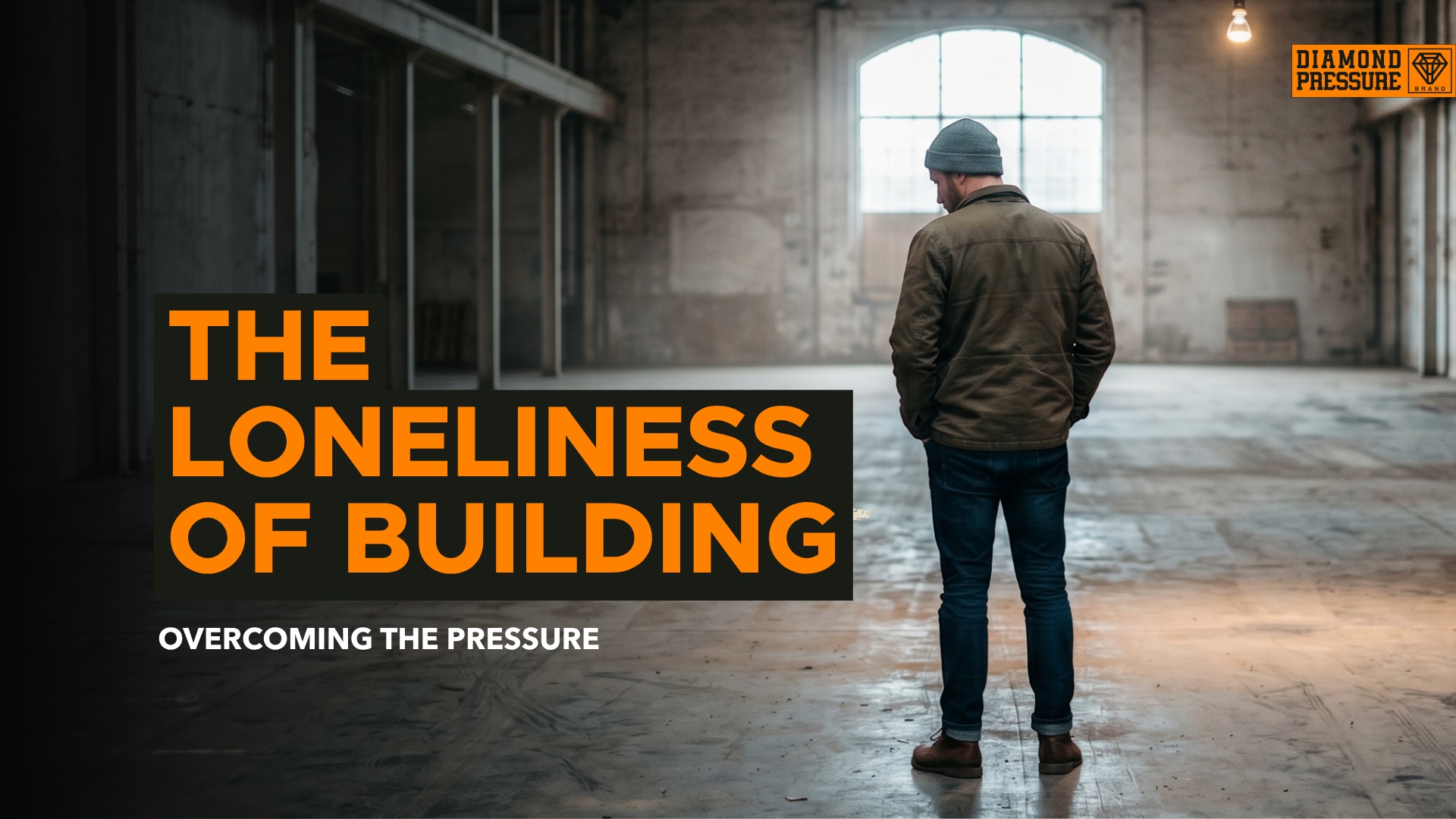
Building can feel lonely even when you are surrounded by people who care about you.
Employees can offer input. Family can listen. Friends can encourage you. But some decisions and risks still belong to the founder, and that gap can make a crowded room feel strangely quiet.
The research backs the experience. Fifty percent of CEOs report chronic loneliness. Entrepreneurs are 5.5 times more likely to experience loneliness than the general population, particularly if they work from home or run an online business. For founders under 34, isolation ranks as one of the top challenges. One in seven female founders names it as her number-one struggle.
This is not a failure to be social. It is a predictable part of carrying responsibility without enough peers who understand it.
Why Building Creates Isolation
A few specific dynamics produce founder loneliness, almost regardless of how social or extroverted you are:
The decision burden doesn't transfer. Employees can give input, but the final call is yours. Investors can advise, but they don't carry the operational weight. Family can listen, but they can't share the responsibility. Every major decision sits with you, alone, regardless of how many people are in the room.
The work isolates you from peers. Friends from before the business don't understand the new reality. Their version of a hard week looks nothing like yours. The disconnect creates a quiet drift, even with people who genuinely care.
The brand requires performance. You can't fully unload on employees who need to believe in the vision. You can't fully unload on customers, investors, or partners. The professional mask stays on most of the time, and the energy of maintaining it accumulates.
Remote and online businesses amplify it. If your work doesn't put you in physical proximity to others, the structural isolation gets worse. Research shows remote founders and online business owners experience significantly higher loneliness rates than those in physical workspaces.
Success doesn't fix it. This one surprises most founders. The assumption is that more revenue, more reach, or more recognition will reduce the isolation. Research shows the opposite: high-performing founders often experience increased loneliness as the gap between their reality and the people around them widens.
The Cost of Carrying It Alone
Loneliness isn't just emotionally uncomfortable. It has measurable effects on performance:
- Impaired decision-making and reduced cognitive flexibility
- Accelerated burnout symptoms
- Higher rates of depression and anxiety
- Worse physical health markers including cardiovascular and immune function
- Reduced creative thinking and problem-solving
- Increased likelihood of business failure correlated with founder isolation
The 2026 data on the trend is concerning. Support organizations report that founder loneliness has worsened markedly over the past year. Some entrepreneurs are now turning to AI chatbots for emotional support, not because the AI is better than human connection, but because they feel safer admitting to a machine how hard things actually are than to a person who might judge them.
That's a flashing warning sign for the founder community. The infrastructure to support people doing the hardest work in the economy is broken.
What Actually Fixes It
The good news: founder loneliness is one of the most solvable mental health issues in entrepreneurship, if you take it seriously and act on it.
The research consistently points to a few specific interventions that work.
1. A Peer Group That Gets It
The single most effective intervention is structured peer connection with other founders. Not friends. Not family. Other people in the seat.
Why it works: peer founders don't need you to explain context. They've been there. The conversation skips past the surface and goes straight to the real stuff. The relief of being understood without translation is its own form of recovery.
Where to find it:
- EO (Entrepreneurs' Organization): global founder network with structured monthly Forums
- YPO (Young Presidents' Organization): for founders meeting revenue thresholds
- Hampton: modern peer community for founders and operators
- The Lonely Entrepreneur: global community of 250,000+ entrepreneurs
- Industry-specific Slack groups, Discord communities, or paid masterminds
- Local accelerator alumni networks
The cost of joining a paid peer group feels high until you've done it for six months. The return, in mental health, business decisions, and longevity, almost always justifies the investment.
2. A Small Inner Circle
Beyond a formal peer group, every founder needs three to five people they can be completely honest with. Not networking contacts. Real relationships with people who know you, get the work, and tell you the truth.
This circle includes:
- One or two founder friends you talk to monthly or weekly
- A therapist or coach who specializes in entrepreneur mental health
- A mentor who's been through what you're going through
- A partner or close friend who knows the personal side
The structure matters. The looseness of "I'll reach out when I need help" almost always means you don't. Build standing relationships with regular contact. The check-ins should happen before you're in crisis.
3. In-Person Connection
Online is better than nothing. In-person is significantly better than online.
The research on social connection consistently shows that physical presence produces stronger reductions in loneliness markers than digital contact. Founders who attend industry events, meet local entrepreneurs, or organize regular in-person meetups report measurably lower isolation than those who rely entirely on virtual connection.
Make in-person time a recurring calendar item. Coffee meetings. Industry events. Founder dinners. Co-working sessions. The cost in time is real. The return is real too.
4. Honest Conversations With the People Already Around You
Sometimes the loneliness isn't about not having people. It's about not letting the people you have actually see you.
A specific practice: pick one trusted person and tell them what's actually going on. Not the version you tell at networking events. The real one. The part you're scared to say out loud.
For most founders, this conversation breaks something open that needed to break. The other person almost always responds better than you feared. The weight of pretending often turns out to be heavier than the weight of being honest.
5. Build Identity Outside the Business
Loneliness gets worse when your entire identity is tied to one role. If you're only "the founder", at work, at home, in your head, then any threat to the business feels like a threat to who you are.
Build other identities:
- A craft, sport, or hobby you genuinely care about
- A community you participate in that has nothing to do with work
- Relationships you invest in that don't depend on professional context
- A creative practice that isn't monetized
These aren't distractions from the work. They're what keeps you whole enough to do the work for the long road.
The Reframe That Matters
Loneliness isn't a sign you're weak. It's a structural feature of the role you've chosen.
The founders who go the distance accept that and build infrastructure to address it directly. They don't pretend they can carry it alone. They don't romanticize the lone-wolf founder narrative. They join groups. They build inner circles. They show up to in-person connection. They get help when they need it.
That's not soft. That's strategic.
The pressure of building is real. The isolation that comes with it doesn't have to be. Break it with intention. Build the relationships that hold you up while you carry the weight. You'll build a better business, and become a better human, by refusing to do this alone.
Stay sharp under pressure. Build the people around you with the same care you bring to the business.
That's how the strongest builders make it for the long road.
---
Keep Building
The strongest builders aren't the ones who carried it alone. They're the ones who built the community that carried with them.
Join the Pressure List for founder notes, drop early access, and real connection with people who get the weight. Built through the hard seasons: together.
[Join the Pressure List →]